
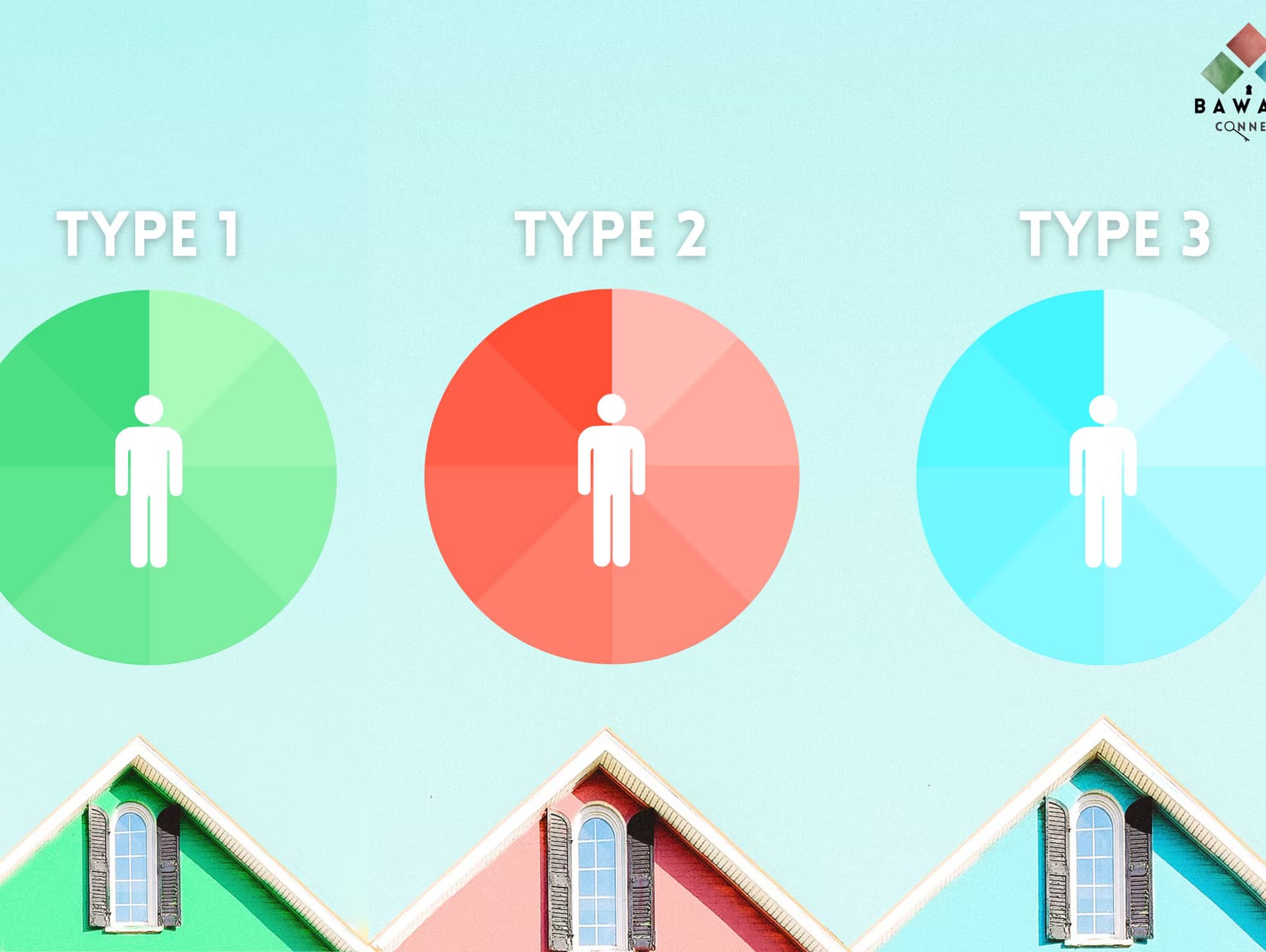
Real estate sector: Types of prospects
It is sometimes acceptable to categorise individuals. It is human nature that you - as well as your clients - assess someone on a first impression...
It is sometimes acceptable to categorise individuals.
It is human nature that you - as well as your clients - assess someone on a first impression.
From the very beginning, the client must feel "at home" 🏠 in your company.
In a future article, we will explore this topic in greater depth.
We will only discuss three main types here. Obviously, individuals come in all imaginable shades.
This is a tool and one of the keys 🔑 to developing your understanding of people in the real estate sector, as well as an anchor point during telephone prospecting.
Type 1: The green individual
Type 2: The red individual
Type 3: The blue individual
First, some information about the DISC method.
The DISC method is a popular approach for assessing and understanding human behaviour. It is based on four main types of behaviour, represented by the letters D, I, S and C, which correspond to specific dominant traits:
Dominance (D): This type of behaviour focuses on self-confidence, quick decision-making and seeking challenges. Type D individuals are often assertive and enjoy taking on challenges.
Influence (I): This type of behaviour focuses on social interactions, communication and influencing others. Type I individuals are often charismatic and enjoy collaborating with others.
Steadiness (S): This type of behaviour favours stability, predictability and harmonious relationships. Type S individuals are often patient, kind and prefer to avoid conflict.
Conscientiousness (C): This type of behaviour emphasises precision, attention to detail and adherence to rules. Type C individuals are often meticulous, analytical and attached to procedures.
The DISC method is used to better understand how individuals interact, communicate and make decisions. By identifying a person's dominant behavioural type, one can adjust their communication and working style to promote better collaboration and understanding.
In the context of real estate management and client relations, the DISC method can be a valuable tool for better understanding the preferences and behaviours of different types of clients, which can improve communication and strengthen professional relationships.
How is this converted into colours?
The DISC method is often associated with colours to facilitate memorisation and visualisation of the four main behavioural styles. These colours are not universally standardised, but they are generally represented as follows:
- Dominance (D): Red - Red personalities are often assertive, determined and results-oriented. They like to take the lead and seek action and challenges.
- Influence (I): Yellow - Yellow personalities are extroverted, social and enthusiastic. They have a positive influence on others and thrive in social interactions.
- Steadiness (S): Green - Green personalities are patient, friendly and teamwork-oriented. They value harmony, collaboration and relationships.
- Conscientiousness (C): Blue - Blue personalities are precise, analytical and detail-oriented. They value structure, accuracy and consistency.
These colours help individuals easily remember the different behavioural styles and apply them when understanding and communicating with others. They are often used in workshops, training sessions and coaching sessions to raise awareness of one's own preferred style and how to communicate more effectively with people who have other preferred styles.
It is important to emphasise that these colours are merely symbolic and offer a simplified representation of the complexity of personality and behaviour. Not all people fit perfectly into one colour category, and individual personalities can vary and present nuances that are not fully reflected by colour associations.
How can I apply this in telephone prospecting in the real estate sector?
Recognising DISC behavioural styles (and corresponding colours) during telephone prospecting for estate agents can help you communicate more effectively and establish a better connection with your prospects. Here are some tips for recognising your prospect's potential behavioural style:
- Observe communication styles: Listen to how your prospect communicates. Dominant people may be direct and concise, influential people may be enthusiastic and talkative, steady people may appear patient and friendly, and conscientious people may ask precise and detailed questions.
- Talk about results or benefits: If your prospect seems interested in quick results, performance and objectives, this may indicate a dominant style. If they seem interested in how your services could increase their social status or network, this could indicate an influential style.
- Build a relationship: If your prospect takes the time to ask you questions and shows interest in you as a person, this may indicate a steady style. Be open and friendly to foster this connection.
- Details and facts: If your prospect focuses on detailed questions about contracts, processes and specific features, this may indicate a conscientious style. Be patient and ready to provide in-depth information.
- Property characteristics: Observe where your prospect places emphasis. A dominant prospect might focus on the possibility of selling the property quickly, while a steady prospect might be more interested in the neighbourhood and lifestyle offered by the property.
- Ask questions and listen carefully: Ask open-ended questions and listen carefully to the answers. This can help you identify the prospect's preferred style by paying attention to the language they use and the topics that interest them.
- Flexible approach: Remember that not everyone fits perfectly into a single behavioural style. People can have aspects of multiple styles. Try to adopt a flexible communication approach that adapts to the signals you perceive.
Remember that assessing behavioural styles is a skill that requires practice and experience. While colours are useful memory aids, it is more important to listen, show empathy and adapt your communication style to the needs and preferences of your prospect, regardless of the colour they might represent.
Type 1 - The green individual
These people are friendly, talkative and warm.
They enjoy chatting 🗣
Numbers and computers are not their thing. In the garden among the flowers and in a cosy living room, they feel at home.
The home of a green type person will be decorated with family photos, plants, and comfort takes priority.
During discussions, it is possible to be personal, wish congratulations when they become grandparents, compliment the lovely garden, and listen to their story.
I personally find these are very pleasant conversations, you build a bond with these people, they are loyal and honest, but often a bit distracted. So good follow-up is necessary.
For this type of person, you need to take your time. They want to get to know you, explain why they are moving and what they are looking for.
When you finish a conversation with these people, you have insider information about their personal story. Quickly take some notes and next time, don't forget to ask about the children.
Type 2 - The red individual
Red types are among the most dominant of us. This type can quickly get worked up and angry, but can also be passionate and enthusiastic.
Don't beat around the bush, get straight to the point. Present yourself and your services clearly. Explain where your added value lies and what they can get from you or how a collaboration could bring added value.
You will need to be confident to convince these people. They will always have something to counter, but if you calmly and empathetically weather the storm, you can certainly build a bond of trust.
Only propose a meeting when you feel the walls are starting to crumble and trust is beginning to build, otherwise you will get a categorical "no" and even an arrangement for a callback will no longer be possible.
Type 3 - The blue individual
"Blue individuals" are professional: rather serious, reserved and appreciate numbers and evidence.
Generally, accountants and other professionals in the financial sector are often found in the "blue type" category.
The home of a blue type person is generally orderly, with neatly trimmed hedges. The house is well organised and tidy.
During conversations, provide proven facts and send documents with statistics.
The blue individual expects a certain professionalism and expertise from you. Once you have been able to demonstrate this, the conversation will proceed in a more relaxed manner.
For a blue type person, it is important that you can explain the services you will provide, put them clearly in writing, preferably with many figures and tables.
Be prepared to negotiate, provide evidence and review contracts. Create informative email templates and make sure you know the real estate market well.
In short, be well prepared.
Type 4 - The yellow individual
Type 4 will be covered in the next blog post. So keep an eye on our upcoming blog posts!